
Find People Across Hamilton County
Official records work best when the first search matches the fact already known. A current address points toward the Assessor and GIS. A court notice points toward the clerk named on it. An old Chattanooga address belongs in city directories and map files. A deceased relative may appear in an obituary citation, probate case, deed, and vital record, each held by a different office.
Names alone need care. Try initials, middle-name forms, suffixes, maiden names, and common spelling changes. Then compare a date, address, parcel, case number, relative, or group affiliation before treating a match as the same person. Hamilton County has separate city, county, and state sources, so one empty result rarely ends a sound search.
- Search the free Assessor roll by owner or address and save the parcel and deed Book/Page.
- Choose the correct court system, then search the party name and compare dates or case type.
- Check deeds, licenses, business filings, or custody records when those sources fit the goal.
- For an older trail, pair city directories with obituaries, maps, yearbooks, and probate.
- When an index stops short, ask the actual custodian for a narrow existing record.
Hamilton County Search Offices
Three offices form the core local route. The Register of Deeds indexes recorded land papers and liens. The County Clerk handles marriage licenses and other statutory services, while probate belongs to the Clerk & Master in Chancery Court. Chattanooga keeps its own municipal court and city administrative records. Full access and request rules are collected with the Hamilton County public records system.
Hamilton County Register of Deeds
625 Georgia Avenue, Room 400
Chattanooga, TN 37402
(423) 209-6560
Hamilton County Clerk
625 Georgia Avenue, Room 201
Chattanooga, TN 37402
(423) 209-6500
Chattanooga Open Records
100 E. 11th Street, Suite 200
Chattanooga, TN 37402
(423) 643-8250
Each office has a counter or direct contact route. That matters when an online portal lacks an image, uses an account, or does not cover the needed year.
Free Hamilton County Property Search
The Hamilton County Assessor search is often the fastest route from a person or place to a durable identifier. It accepts an owner in last-name-first order, a street name, a street number, or a parcel. One complete field is enough. A street-name-only query can help when the number changed. Results confirm the owner, physical or situs address, parcel, value information, and the Book/Page reference that bridges to a recorded deed.
| Search field | Required | Best use |
|---|---|---|
| Owner | No | Enter surname first to compare current owners |
| Street Name | No | Retrieve a whole street or handle changed numbers |
| Street Number | No | Narrow a known street address |
| Parcel | No | Carry one stable key into tax and GIS sources |
The official Hamilton County GIS viewer adds parcel geography and municipal boundaries. The manifest capture below shows that map-based access. A postal Chattanooga address can sit beyond Chattanooga's city limits, so the map helps select the right permit or code-record custodian.

The parcel layer turns a street description into a mapped county location, but it should not be used to assume that an owner lives on the land.
Note: Keep the parcel number exactly as displayed because spacing helps carry the same property across Assessor, GIS, and tax systems.
Hamilton County Deed Search Shortcut
Remote Register access is not a free anonymous lookup. The county documents a monthly account for data and images from July 1, 1969 forward. The system supports Party, Book & Page, Document, Property, Party/Property, Index, and Quick modes. The practical shortcut is to get the current Book/Page from the free Assessor first. A targeted phone, email, counter, or records-form request may then avoid paying for broad remote access.
The Register record-search landing page explains those access routes.
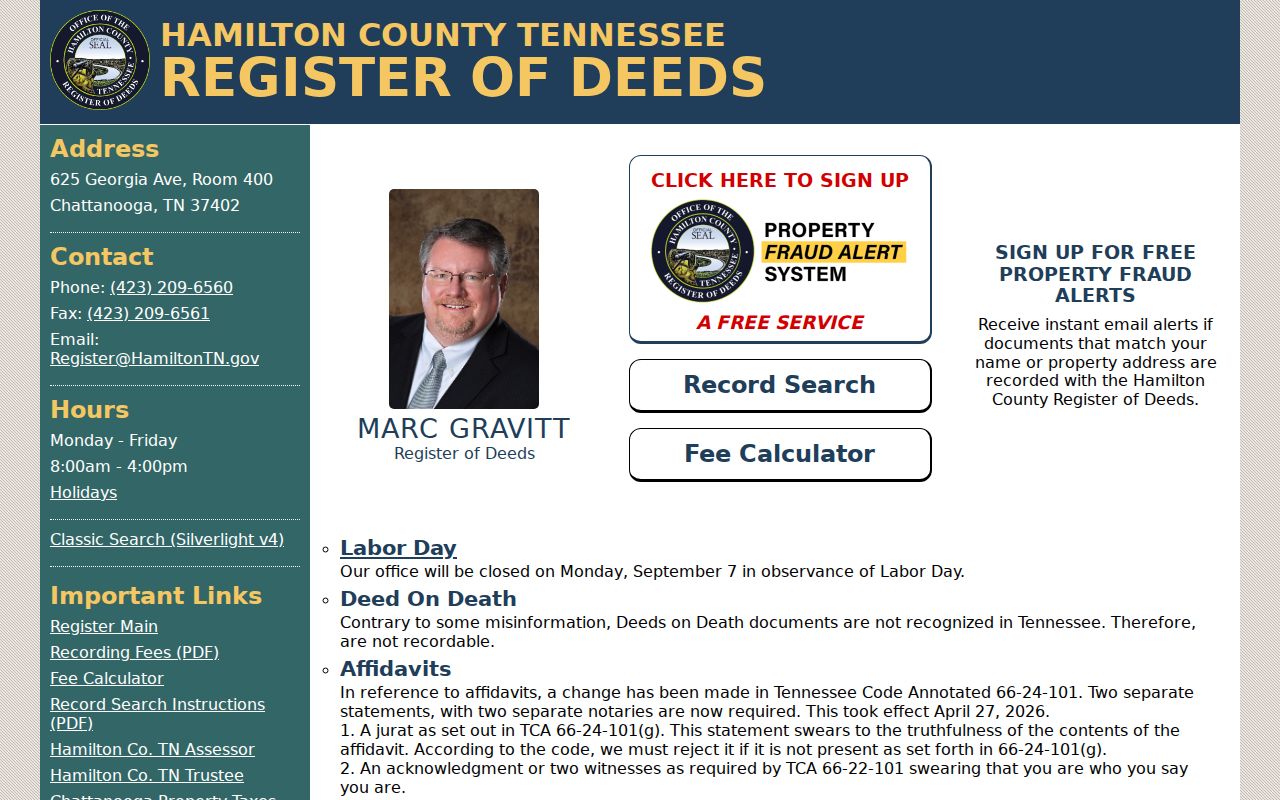
This screen is the gateway, not proof that a deed match belongs to the person sought. Compare party role, book and page, land description, and related address.
- Grantor
- The person or entity conveying an interest.
- Grantee
- The person or entity receiving that interest.
- Book/Page
- The recording reference used to retrieve a specific instrument.
- Situs
- The physical parcel address, which may differ from an owner's mailing address.
Note: Older deeds and direct or reverse party indexes may require TSLA microfilm instead of the current remote system.
Choose a Hamilton County Court
Court records are split by subject. Circuit and Sessions Civil use the TN Case Finder route. Chancery holds probate, estates, wills, trusts, guardianships, boundary matters, and other equity cases. Criminal and Sessions Criminal share a separate local portal. Chattanooga City Court covers city ordinance matters. Federal cases for the area belong to the Eastern District of Tennessee and its PACER route.
| Court route | Names tied to | Online or fallback |
|---|---|---|
| Circuit and Sessions Civil | Civil parties, attorneys, dates | TN Case Finder, then clerk |
| Chancery and Probate | Estates, heirs, trusts, case parties | Local portal, Room 300 clerk |
| Criminal and Sessions Criminal | Defendants, docket events | Local daily-updated portal, then clerk |
| Chattanooga City Court | Municipal citations and dockets | City case search, Room 104 clerk |
A docket is the court's case-event list. It can show a party name, case number, court type, filing or hearing date, attorney, and published disposition. Juvenile, adoption, sealed, and expunged material stays restricted. An online name match is not identity proof, and certified copies come from the clerk.
Note: The statewide case-history portal focuses on appellate matters, so Hamilton County trial files still belong with the local clerk.
Chattanooga Court Name Search
Chattanooga publishes unusually clear search instructions for its City Court. Choose Name, Citation Number, or Docket Number. A name search requires only the last name; first name, birth date, driver license, and the similar-sounding-name option can narrow or broaden the results. Upcoming dockets have their own view. The clerk supplies the underlying record when the screen is not enough.
The official City Court search guide is shown in the captured interface below.
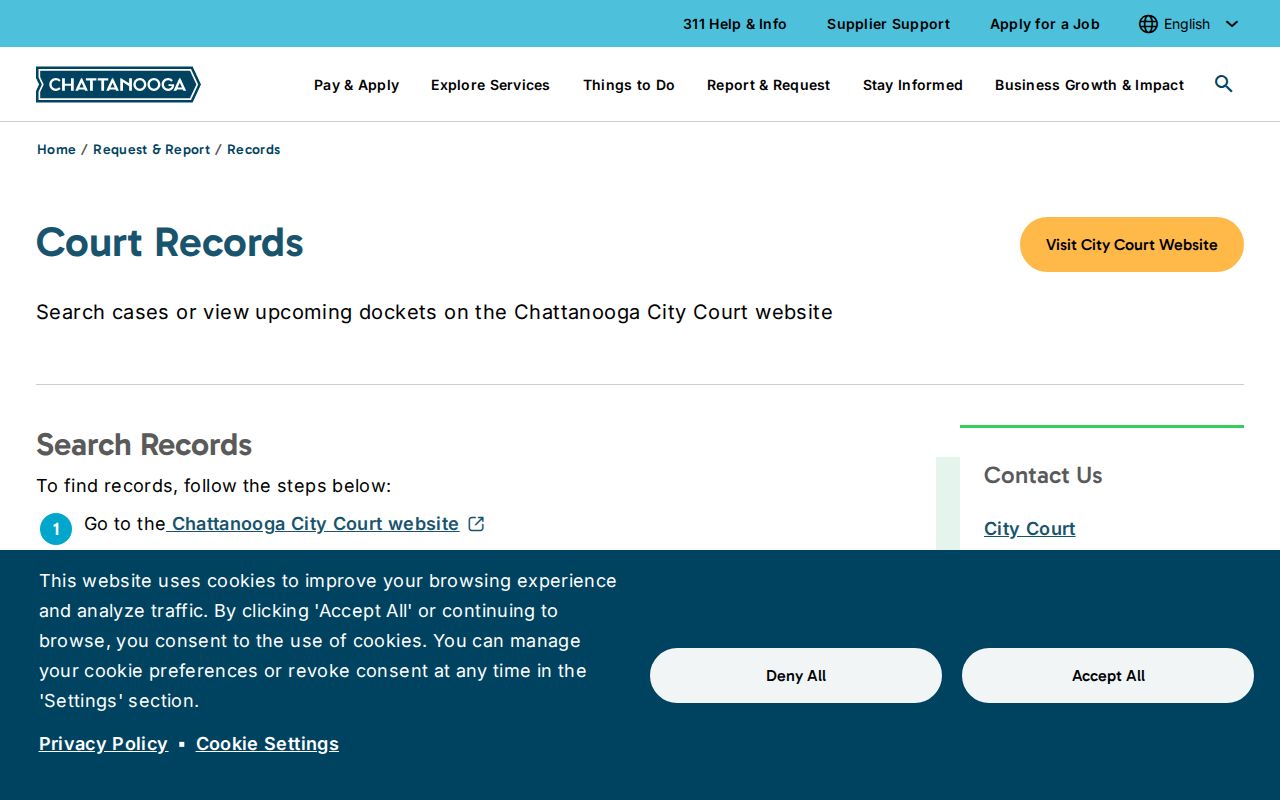
The search can connect a name with a citation or scheduled event. City Court only covers Chattanooga ordinance cases, so it does not replace the county civil and criminal clerks.
Trace Hamilton County Vital Records
Recent vital certificates have restricted access. The Hamilton County Health Department can issue statewide Tennessee birth and death certificates. The state Office of Vital Records keeps birth, death, marriage, divorce, and annulment certificates. The County Clerk retains local marriage licenses, while the court that granted a divorce holds the decree and case file.
Tennessee opens births after 100 years and deaths, marriages, divorces, and annulments after 50 years. Within those periods, a qualified person needs proof of identity and relationship. A state certificate search costs $15 per copy or search. The official certificate instructions cover in-person, local health department, mail, and authorized online channels. Older open material moves toward the Tennessee State Library and Archives.
For family history, do not stop with a certificate. Pair a death entry with the Chattanooga Obituary Index, cemetery or church sources, probate, and deeds. A certificate proves a vital event; the other records can supply relatives, residence, group ties, and an estate trail.
Note: The state retains a certificate search fee even when no matching record is found, so check names and dates first.
Hamilton County Heir Search Trail
Probate in Hamilton County is a Chancery Court function, not a County Clerk function. An estate file may identify a personal representative, heirs, property, claims, and dates. The Chattanooga Public Library's obituary index covers 1873 to the present and gives the name, newspaper, and publication date. It is a citation tool, so the original newspaper must still be read.
A useful chain is obituary citation, original article, Chancery case, Assessor parcel, and deed. Newspapers may add spouses, children, church, cemetery, and funeral-home details. The deed can show how land moved after death. Older city directory street listings help test whether the named person occupied the address or only owned it.
Identity check. Common names can join unrelated families. Confirm a date, relative, address, parcel, or case number at each step before linking two records.
Hamilton County Custody Lookups
The Hamilton County Sheriff's inmate search covers current local detention and accepts a last name or SPN. A result may show a photo, name, SPN, birth date, bond, judge, division, court date, and notification or visit links. Tennessee's Felony Offender Information Lookup, or FOIL, covers current and former state felony custody or supervision. The TBI registry is a separate statutory source with its own search fields and reporting rules.
The official Tennessee FOIL form appears in the manifest image below.
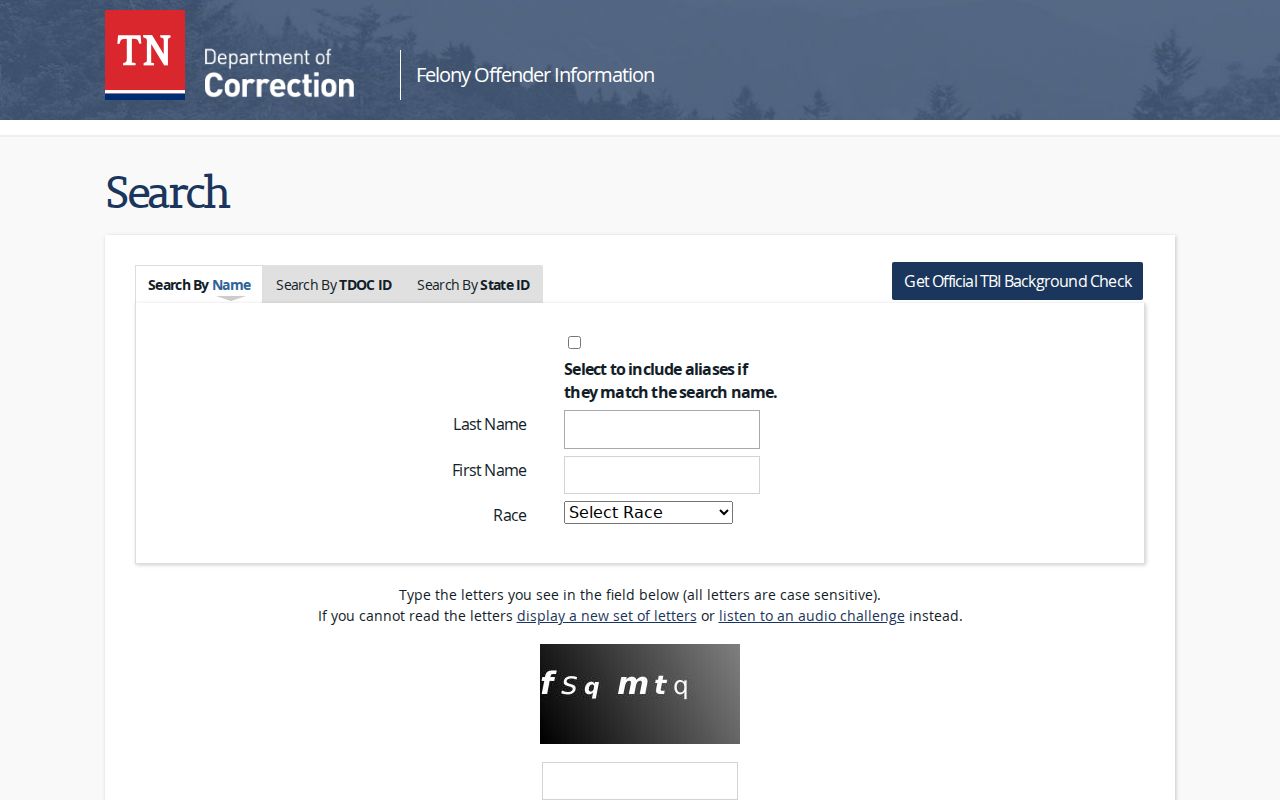
FOIL may provide identifiers, custody or supervision, sentence, location, and parole details. A jail entry shows detention, not conviction, while an absent FOIL hit does not rule out a local or non-TDOC case. Confirm with the court or agency that created the record.
Hamilton County License Name Search
Official license and filing systems can distinguish people with the same name. Tennessee Health Professional Licensure Verification accepts first, middle, and last name, city, state, ZIP, profession, license number, and a CAPTCHA. Results can show license identity, status, and applicable profile or discipline data. The state says the verification source is updated daily.
The health-professional verification form is shown here.
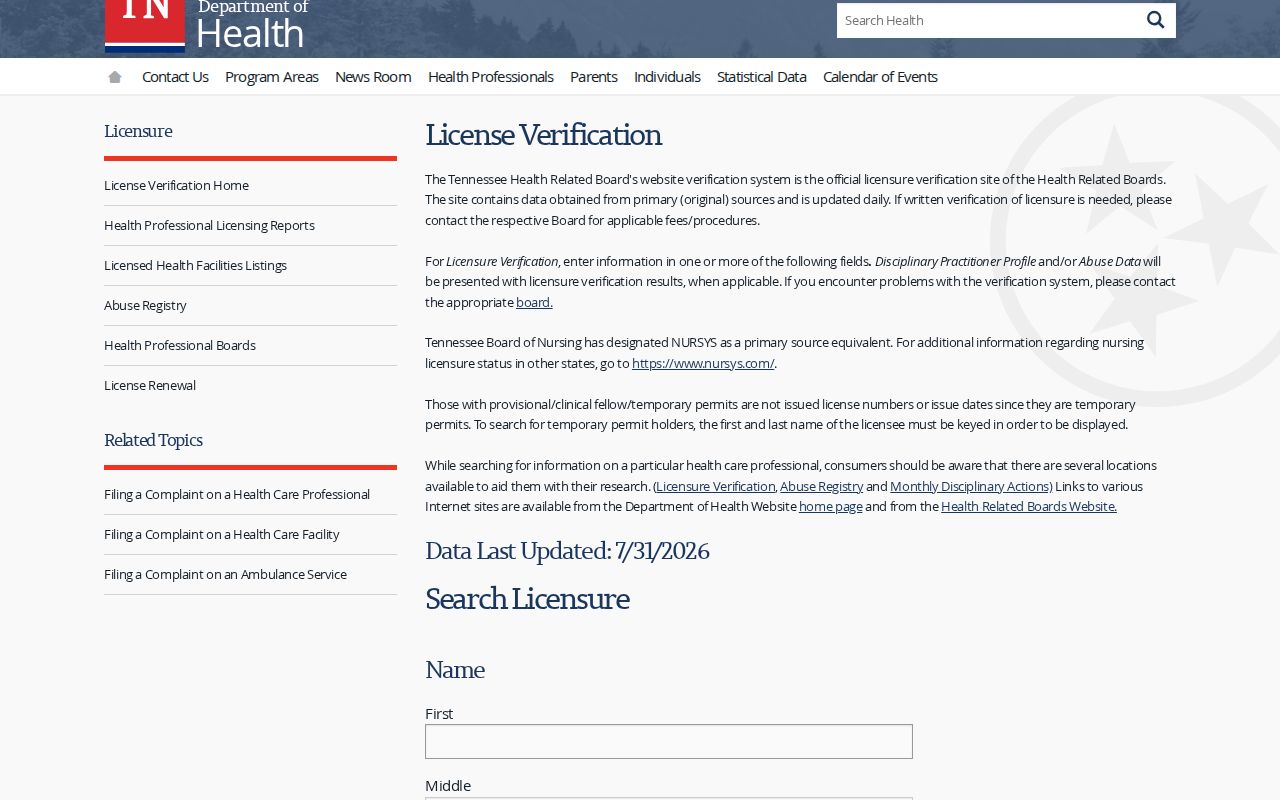
The profession and city fields make a common-name search more precise. Tennessee's Business Information Search can separately connect an entity with its status, registered agent, address, and filing history. A city business license shows tax registration, not proof of every zoning or professional requirement.
Hamilton County Voter Search Limits
Tennessee's personal voter lookup requires Hamilton County, first and last name, birth month, and birth year. It is meant to return one's registration status, precinct or district, polling place, and absentee information, not to browse everyone who shares a surname. Tennessee does not register voters by party, and participation history never reveals a ballot choice.
The Election Commission handles corrections, inspection, list orders, districts, election history, and records requests. Public and confidential fields, the fixed county-file charge, and political-use certification are explained in the Hamilton County voter registration lookup. Safe at Home can protect an eligible participant's actual address with a substitute government mailing address.
Lawful use only. Do not use voter, court, property, or directory details to stalk, harass, threaten, impersonate, or defeat an address-protection program.
Search Hamilton County's Former Seats
Hamilton County began in 1819, and its records geography changed with its seat. Courts first met near Daisy, then at Dallas. The seat moved to Harrison in 1840 and Chattanooga in 1870. Early people and land references may therefore use Dallas or Harrison rather than today's county seat. A modern place-name-only search can miss those entries.
Former James County adds another path. Its surviving marriage, minute, magistrate, assessor, inventory, deed-acknowledgment, and bond books cover communities that later returned to Hamilton County after James County dissolved in 1919. The county warns that courthouse fires may have caused losses. A 1936 WPA project also preserved Hamilton County Deed Book F from 1844 through 1848 on microfilm.
| Year | Hamilton County record change |
|---|---|
| 1819 | Hamilton County created |
| 1840 | County seat moved to Harrison |
| 1870 | County seat moved to Chattanooga |
| 1919 | James County dissolved, leaving a separate surviving archive |
| 1936 | WPA microfilmed Deed Book F |
Reconnect Through Hamilton County Archives
Chattanooga Public Library and UTC cover people who may never appear in a useful modern portal. The library keeps city directories from 1871 through 2008, with volumes before 1938 on microfilm. No volume was published in 1873 through 1875, 1877, or 1879, so a missing year is not evidence that a person left. Alphabetical entries connect names with addresses and occupations, while street sections reverse the path from an old address to a listed occupant. Annexation can also explain why an address first appears late.
The library's Local History and Genealogy Department adds newspaper microfilm, cemetery and church records, wills, deeds, maps, neighborhood files, and the Chattanooga Obituary Index. Its Newspapers.com Southeast Edition includes the Chattanooga Times from 1869 through 1963 for onsite users. Remote researchers may ask for priced scans or photocopies. The obituary index itself supplies a citation rather than an article image, so use its date and newspaper to retrieve the full notice.
UTC Special Collections extends that trail through 63 full-text searchable Moccasin yearbooks, catalogs reaching 1888 to 1889, predecessor-school records, and Chattanooga History Collections. Named factory and business archives preserve group photos, newsletters, and community context from firms such as Brock Candy, Dixie Mercerizing, United Hosiery Mills, Wheland Foundry, and Thacher Medicine. These sources can help reconnect classmates, faculty, club members, congregation members, and old military or community friends. When an item is not online, UTC accepts archivist questions and may provide up to 200 scans free.
Note: Give an archivist a name, date range, and likely group so the request can be aimed at a specific collection.
When Hamilton County Search Stops
An online dead end calls for a custodian, not a broad guess. Tennessee citizens can request existing nonexempt records under the Tennessee Public Records Act. Describe the record type, person or parcel, date range, office, case or book/page number, keywords, desired format, and delivery method. A custodian may ask for proof of state citizenship and an advance estimate for copies or labor.
Records ready at hand should be produced promptly. If that is not practical, the office has seven business days to produce them, deny access in writing with a legal basis, or explain the delay and provide a reasonable date. Inspection is free. An agency does not have to create a new cross-office compilation. The Office of Open Records Counsel can explain the process and mediate a dispute, though it does not fetch the record.
For local history, the fallback chain is different: Chattanooga Public Library, UTC Special Collections, TSLA catalogs, microfilm, and an archivist request. UTC offers up to 200 scans without charge, while the library can quote scans or copies from non-circulating sources. A short, precise question tied to a name, year, address, or collection is far more useful than a request for everything about a person.